
Two quotations can both say “pipette calibration” while promising different work. One may include measurements before servicing; another may report only the condition after adjustment. For a laboratory in Uganda, those are not interchangeable records. Define the evidence you need before comparing the fee.
Send an inventory, not just a pipette count
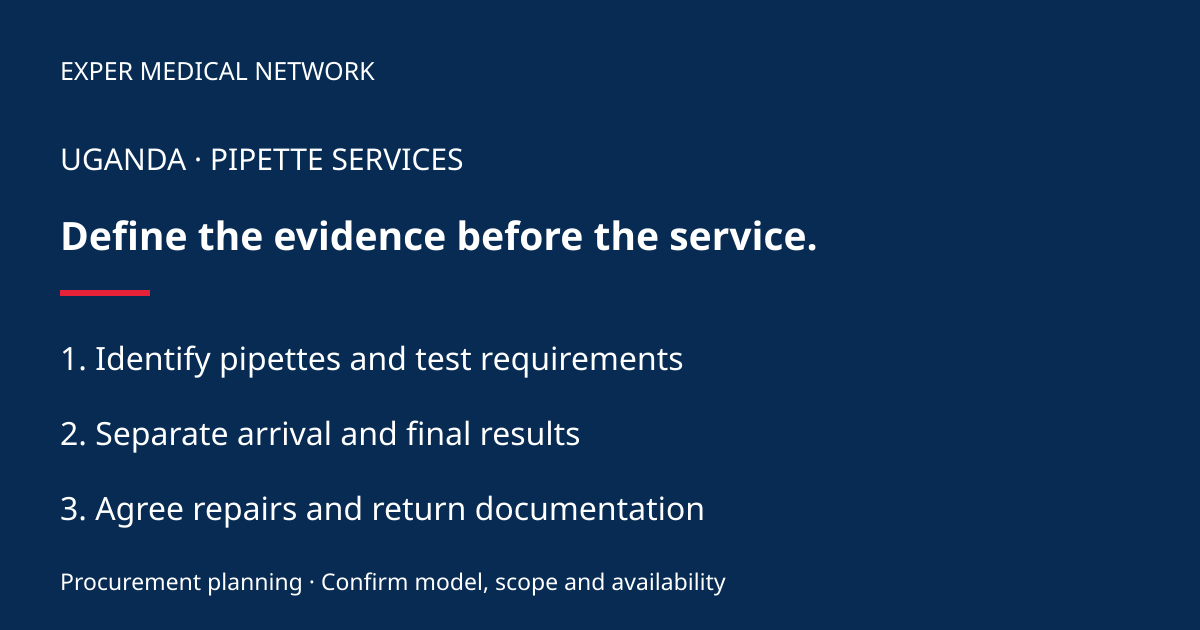
List manufacturer, model, serial or asset number, volume range and channel count. Record any fault, leakage concern or recent damage separately. Identify the laboratory’s actual working volumes and ask the responsible quality lead to specify the required test scope and acceptance criteria.
Keep the service request distinct from consumable selection. Our pipette-tip buying guide addresses tip compatibility; this guide concerns the evidence commissioned from a service provider.
Ask for as-found and as-left results explicitly
“As found” describes the condition checked on arrival, before changes; “as left” describes the condition after the agreed work. Eppendorf’s published service options distinguish these records and show that accredited documentation can cover different stages depending on the package. Its offerings also vary by country. This is an example of why scope matters, not an assertion that those packages are available through Exper.
If the laboratory needs evidence about previous use, discuss arrival measurements before authorising adjustment. A final passing result does not establish how the pipette performed before repair. The laboratory’s quality team decides whether an out-of-tolerance finding requires review of earlier work.
Define the certificate and method requirements
Ask which volumes and channels will be measured, how many measurements are included, what method is used and what results are reported. Request an example report with customer information removed. Have the quality lead review identification, measurement results, uncertainty information where applicable and the statement against the agreed criteria.
If accredited calibration is required, ask for the provider’s current accreditation and applicable scope. A mention of ISO/IEC 17025 on a quotation is not a substitute for checking that evidence. Do not assume Exper holds calibration accreditation or that any certificate-shaped document meets your laboratory’s requirements.
Separate maintenance from repair authorisation
Clarify cleaning, routine maintenance, replacement parts and adjustment. Ask whether additional repairs require approval and whether rejected or unrepairable instruments incur assessment charges. Agree whether the laboratory receives the initial findings even if it declines the repair.
For illustration, servicing an entire pipette set at once may leave a laboratory unable to perform its scheduled work. Plan suitable reserve equipment or a phased service with the laboratory lead. Do not assume a loan instrument or a particular turnaround time is included.
Plan a documented handover
Obtain the receiving provider’s decontamination and packing requirements before sending instruments. Keep the dispatch inventory and record what returns against it. The laboratory should review the documents and decide when each pipette can re-enter use; a service sticker alone is not the complete handover.
Send Exper your location in Uganda, instrument list, quantities and required documentation through our technical services enquiry. Ask us to confirm what scope can be arranged and who will perform it before committing. Our maintenance-record guide helps organise the resulting asset file.
Reference reviewed 14 November 2026: Eppendorf pipette service package descriptions. No service accreditation, manufacturer representation or local availability is implied by citing this example.
Contact +256 756 789 821 or info.brandexper@gmail.com with your destination, equipment list and quantities. Exper requires 100% payment before delivery. Request current availability and written terms for your order.